
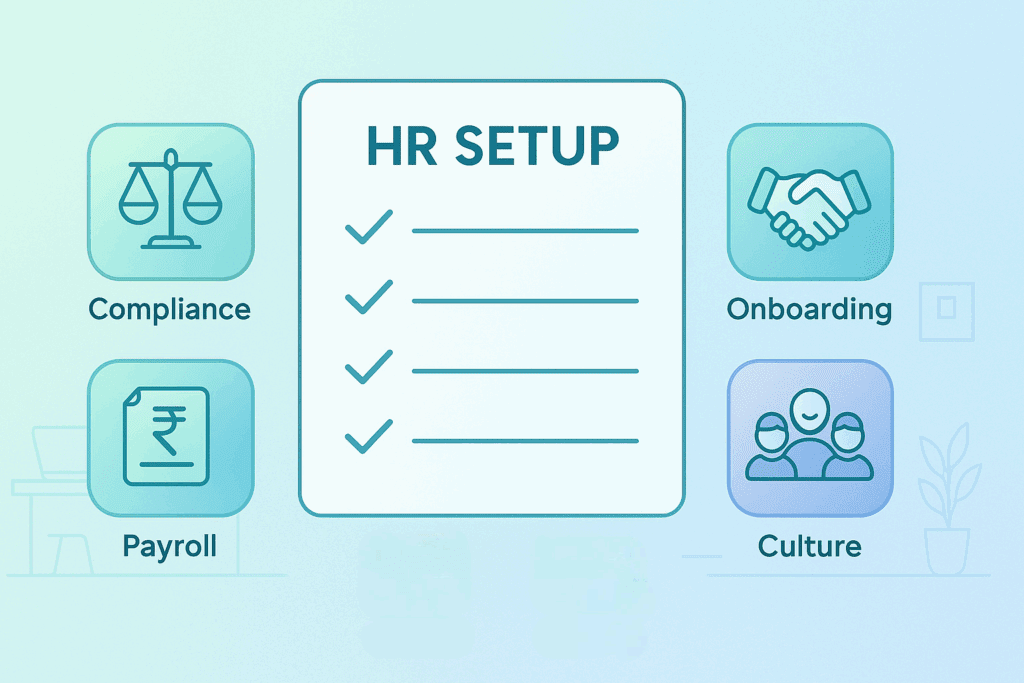
Starting a business in India is exciting. But once the first hires are made, founders often face a big question: “How do we set up HR the right way?” HR setup is not just about creating policies or tracking attendance. It’s about building the entire foundation that supports your people, compliance, and culture. Done right, it can make your business scalable, legally secure, and attractive to top talent. Done wrong, or delayed, it can lead to penalties, employee dissatisfaction, and operational chaos.
In this blog, we’ll break down what HR setup means, why it matters in India, and the exact steps every new company should take.
What is HR Setup?
HR setup refers to the process of creating the HR framework, policies, systems, and compliance mechanisms a business needs to function smoothly.
In India, HR setup usually includes:
Statutory compliance registrations (EPF, ESIC, Shops & Establishments Act, etc.)
Payroll structure and systems
Recruitment and onboarding processes
Employee handbooks, policies, and code of conduct
HR software (for attendance, leave, performance, etc.)
Grievance redressal and employee relations setup
Think of it as laying the “people foundation” of your company. Without it, even the best business idea struggles to grow.
Why is HR Setup Crucial in India?
Unlike some countries, India has a complex web of labor laws. From minimum wages to maternity benefits, compliance is not optional.
Here’s why HR setup is essential:
Legal Protection: Missing compliance deadlines can mean heavy fines or even legal action.
Employee Trust: Clear policies and fair payroll build loyalty.
Scalability: A structured HR system supports fast growth.
Culture Building: HR setup is where values and culture first get documented.
For instance, many startups delay registering for EPF (Employees’ Provident Fund), thinking it’s only for bigger firms. But the moment they cross 20 employees, they’re legally bound. Lack of timely HR setup leads to sudden penalties.
Step-by-Step Guide to HR Setup in India
Here’s the roadmap for setting up HR in a new company:
Step 1: Register Under Statutory Laws
Shops & Establishments Act registration
Provident Fund (EPF) registration
Employees’ State Insurance (ESIC) registration
Professional Tax (in applicable states)
Gratuity Act compliance
For a deeper dive, check out our detailed HR Compliance Checklist for Indian Businesses.
Step 2: Build Payroll & Compensation Systems
Define salary structures (basic, allowances, deductions).
Select payroll software or outsource payroll processing.
Ensure compliance with TDS, PF, and ESI deductions.
External resource: Income Tax Department of India, Payroll Deductions
Step 3: Create Employee Policies & Handbooks
Leave policy, work hours, and attendance rules
Anti-harassment and grievance redressal policy
Code of conduct and disciplinary rules
Related read: Why Most HR Outsourcing Partnerships Fail (And How to Choose the Right Vendor)
Step 4: Recruitment & Onboarding Framework
Define hiring processes (job descriptions, interviews, background checks).
Set up onboarding steps (offer letters, documentation, induction).
Maintain employee records digitally for compliance.
Step 5: Adopt HR Technology
Manual tracking is risky. An HRMS (Human Resource Management System) makes processes smooth.
Attendance & leave management
Payroll integration
Employee self-service portals
Related: India’s Best Payroll and HRMS Software: Features That Truly Matter
Step 6: Focus on Employee Engagement & Culture
Recognition programs
Feedback channels
Regular HR check-ins
This is where HR shifts from “compliance” to “culture.” Early investment here creates long-term retention.
Conclusion
HR setup is more than a checklist, it’s the backbone of your business operations. For new companies in India, a well-structured HR setup means fewer compliance headaches, smoother payroll, and a workplace where employees feel valued.
At HRTailor, we specialize in helping startups and growing companies build their HR setup from scratch, from statutory registrations to HRMS adoption. If you’re setting up your company in India, our team can ensure you start strong, stay compliant, and focus on growth.
Frequently Asked Questions
What is HR setup for a new company in India?
The set of one-time actions to make hiring, paying and managing employees legal and repeatable: PF and ESIC registration where applicable, Shops Act registration, salary structure, offer letter template, HR policies, HRMS or payroll tool, and a statutory calendar.
When does a new company need PF and ESIC registration?
PF becomes mandatory once you have 20 employees. ESIC becomes mandatory when you have 10 or more employees drawing wages up to Rs 21,000 (Rs 25,000 for persons with disabilities). Both should be registered proactively, not after the count is hit.
What HR policies should a new Indian company draft on day one?
Leave policy, attendance policy, offer and appointment letter templates, code of conduct, POSH policy (mandatory once you have 10 or more staff), and IT and data policy. WFH and travel policies come later.
What is the fastest way to set up HR for a new Indian company?
A packaged HR setup service that handles PF and ESIC registration, Shops Act, HRMS onboarding, salary structure and policy templates in 2 to 4 weeks. Doing it in-house from scratch typically takes 3 to 4 months and misses filings.
Every registration, monthly filing and annual return for Indian employers - in one place.
Get it free →