A Complete Guide to HR Operations Management for Growing Companies
Why HR Operations Matter More Than Ever
As companies grow, complexity increases. However, growth without structure often leads to chaos.
HR is no longer just about hiring. Instead, it involves managing processes, systems, and employee experiences efficiently.
Without proper systems, delays occur. Moreover, errors increase and employee satisfaction declines. Therefore, strong HR operations management becomes essential for sustainable growth.
What is HR Operations Management?
To put it simply, HR operations management focuses on managing day-to-day HR processes efficiently.
It ensures that all HR functions run smoothly. Additionally, it connects people, processes, and technology.
These operations typically include:
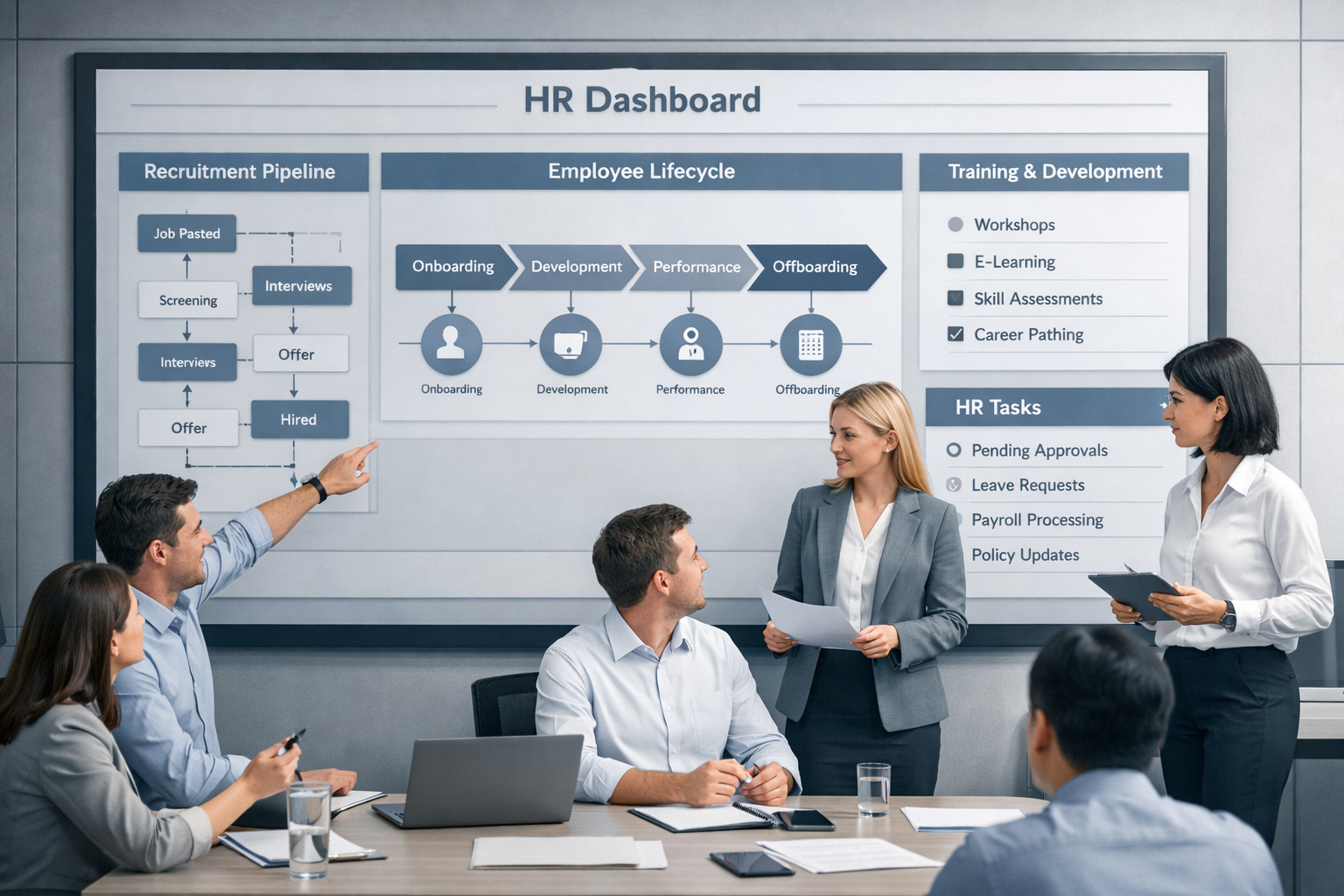
Employee onboarding and lifecycle management
Payroll and compliance administration
Leave and attendance systems
HR documentation and record management
Employee support and helpdesk
Thus, it creates a structured and reliable HR framework.
Core Components of Effective HR Operations
1. Standardized Processes
Consistency is critical. However, many growing companies lack defined HR processes.
When processes are standardized, tasks are completed faster. Moreover, errors are reduced significantly.
As a result, teams experience clarity and efficiency.
2. Technology-Driven Systems
Manual systems often slow down operations. Therefore, digital tools should be adopted.
With HR systems in place, data is managed efficiently. Additionally, reporting becomes easier and more accurate.
Consequently, decision-making improves.
3. Compliance and Risk Management
Compliance is not optional. Yet, it is often overlooked.
With structured operations, compliance requirements are managed proactively. As a result, risks are minimized.
Moreover, businesses stay aligned with regulations without last-minute stress.
4. Employee Lifecycle Management
Every employee journey matters. From hiring to exit, each stage should be well managed.
When lifecycle processes are structured, employee experience improves. Therefore, retention and engagement increase.
Additionally, communication becomes more transparent.
5. Performance and Process Optimization
Continuous improvement is essential. However, without tracking, improvement is difficult.
With proper systems, performance can be measured. Consequently, processes can be optimized over time.
Thus, HR operations become more efficient and scalable.
Common Challenges in HR Operations
Even growing companies face challenges.
For instance, processes may be inconsistent. Additionally, manual work increases dependency on individuals.
Moreover, lack of systems leads to delays. Therefore, productivity is affected.
However, these challenges can be addressed with the right approach and structure.
How to Improve HR Operations in Growing Companies
1. Start with Process Clarity
Firstly, define every HR process clearly. This ensures consistency across teams.
2. Adopt the Right Tools
Secondly, invest in HR technology. This reduces manual work and improves accuracy.
3. Focus on Documentation
Additionally, maintain proper records and policies. This helps avoid confusion and ensures compliance.
4. Train and Align Teams
Moreover, teams should be aligned with processes. Therefore, training becomes important.
5. Continuously Optimize
Finally, review and improve processes regularly. As a result, efficiency keeps improving.
Conclusion
Strong operations are the backbone of effective HR. However, building them requires a structured approach.
With the right systems in place, HR operations management enables businesses to improve efficiency, reduce errors, and scale smoothly.
Instead of managing HR reactively, companies can build proactive and reliable systems.
For growing businesses looking to strengthen their HR foundation, working with experienced partners like HRTailor can simplify operations and bring much-needed structure. With the right support, efficient HR operations become easier to implement and sustain.
FAQs
HR operations management focuses on handling daily HR processes like payroll, onboarding, and compliance efficiently.
It ensures smooth processes, reduces errors, and improves employee experience as the company scales.
Key functions include onboarding, payroll, compliance, attendance, and employee lifecycle management.
By standardizing processes, using technology, maintaining documentation, and continuously optimizing workflows.
Add Your Heading Text Here

About Shankar
HR Technology Analyst at HRTailor
Shankar is an HR Technology Analyst at HRTailor, focusing on HRMS implementation, digital HR transformation, and technology-driven HR solutions for Indian businesses. He writes about HR software selection, biometric attendance systems, cloud-based payroll platforms, and how SMEs can leverage technology to automate HR.