
Updating Your HRM Policies for Wage, Gratuity & Overtime Changes After New Labour Codes
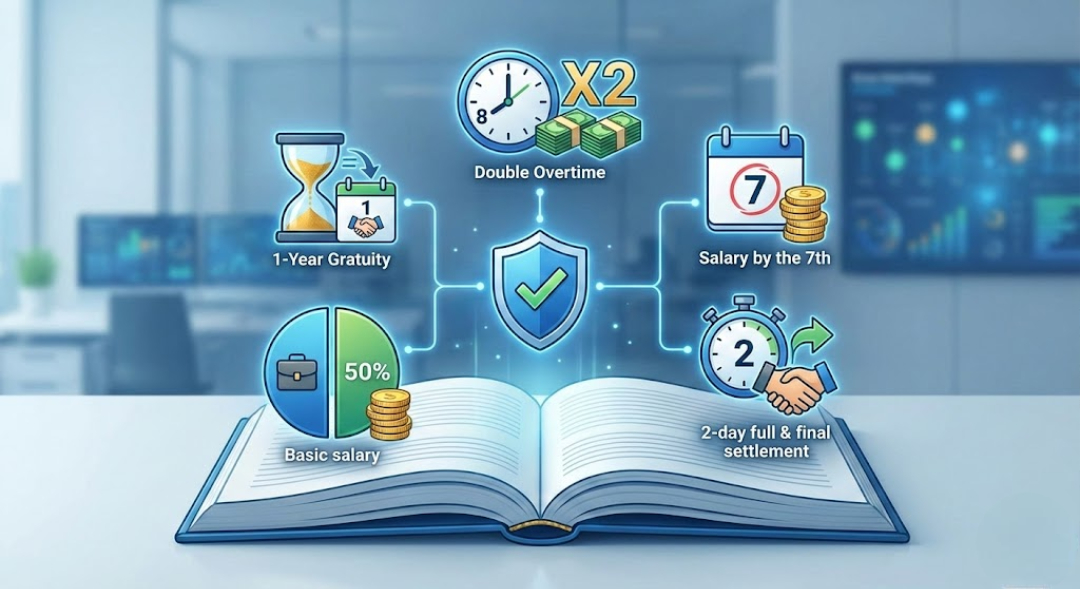
If you’re a founder, director or HR head in India right now, you’ve probably seen the charts doing the rounds on social media about the new labour codes. Basic salary up. Gratuity sooner. Salary date earlier. Overtime at double pay. Full & final within two working days.
It looks simple in a graphic. However, when you try to apply it to real employees, real cost and real systems, it suddenly becomes complicated. Old appointment letters don’t match. Salary structures feel outdated. Payroll cycles look risky.
The good news is: once you update your HRM Policies in a structured way, these changes stop being scary and start becoming a competitive advantage. You show employees that you are fair and compliant, and you show authorities that your documentation and processes are aligned with the new rules.
Let’s translate that “recent changes in labour laws” image into clear employer actions.
What the New Labour Codes Are Actually Asking You to Change
1. Basic Salary: From 30% to at Least 50% of CTC
Old rule: Basic salary had to be at least 30% of CTC.
New rule: Basic salary must be at least 50% of CTC, which directly raises the base for PF and gratuity.
This means you can no longer push too much into allowances or variable components just to save on statutory contributions. Your policies, salary structures and appointment letters have to reflect this new proportion.
2. Gratuity: From 5 Years to Just 1 Year
Old rule: Basic salary had to be at least 30% of CTC.
New rule: Basic salary must be at least 50% of CTC, which directly raises the base for PF and gratuity.
This is a huge shift. It impacts your cost, your exit calculations and how you write benefits in letters and policy documents.
3. Salary Credit Date: From 10th to 7th of the Month
Old rule: Salary could be paid by the 10th of each month.
New rule: Salary must be paid by the 7th.
Therefore, your attendance cut-off, payroll processing timeline and bank payment cycles all need to move up. Any delay beyond the 7th can now create compliance risk and employee dissatisfaction.
4. Overtime: Consistent Double Pay Beyond 8 Hours
Old rule: Overtime rules differed by state and position.
New rule: Work beyond 8 hours per day should be paid at double pay.
Suddenly, informal “please stay back” culture becomes expensive and risky if it’s not documented and approved properly.
5. Weekly Work Limit: 48 Hours Instead of 60
Old rule: Up to 12 hours per day allowed, maximum 60 hours per week.
New rule: Up to 12 hours per day still allowed, but maximum 48 hours per week.
So, stretching people too many days in a row is no longer acceptable. You must track weekly totals, not just daily shifts.
6. Full & Final Settlement: From 30–60 Days to 2 Working Days
Old rule: F&F settlements were typically cleared within 30–60 days.
New rule: They must be cleared within 2 working days.
This is where many companies are most exposed. Slow F&F has been “normal” for years. Now it can clearly go against the spirit of the new code.
Why Your HR Policies Need a Serious Update
Because of these changes, it’s no longer enough to tweak a few Excel formulas. If your written rules and actual practices don’t match, you are creating a trail of contradictions.
- Appointment letters may still show old gratuity conditions.
- HR manuals may not mention full & final timelines correctly.
- Overtime rules may be unclear or inconsistent.
- Payroll cut-off dates may not support the 7th-of-month salary requirement.
When you update your HRM Policies once, carefully, you give your HR, finance and leadership team a common rulebook. Everyone stops guessing.
Step-by-Step: Where to Start Updating Policies
Step 1: Redesign Salary Structures Around the 50% Basic Rule
Start with your CTC breakup:
- Ensure basic salary is at least 50% of CTC for all relevant employees.
- Recalculate PF and gratuity on this revised base.
- Review allowances and variable pay so costs are still sustainable.
Step 2: Rewrite Gratuity and Exit Policies
Your policies must now clearly say:
- Gratuity is available after 1 year of service (where the new code applies).
- Fixed-term employees are treated on par with permanent employees for benefits.
- Gratuity is considered while doing full & final calculations.
Step 3: Move Your Payroll Calendar to Support the 7th Salary Date
You can’t pay reliably by the 7th if you’re still collecting attendance on the 7th.
With HRTailor, the typical cycle looks like this:
- 1st–2nd: You provide attendance data, or we pull it from the HRMS.
- 3rd–4th: We share preliminary payroll, including overtime, leaves and deductions.
- 5th–6th: You confirm, we freeze payroll.
- 7th: You release salaries.
This rhythm keeps you aligned with the new salary credit rule and reduces stress at month-end.
Step 4: Formalise Overtime Approvals and Double Pay
Your overtime policy now needs to mention:
- Normal working hours per day and per week.
- When overtime is allowed and who can approve it.
- How hours beyond 8 per day will be captured.
- That overtime is paid at double the normal rate.
Step 5: Rebuild Your Full & Final Settlement Process
Clearing F&F within two working days sounds impossible if your documents and approvals are scattered. You need:
- A fixed checklist for resignations and exits.
- Standard formats for F&F calculations.
- A clear workflow so finance, HR and reporting managers act quickly.
Conclusion
The new labour codes have raised the bar on how you handle wages, gratuity, overtime, working hours and exits. However, you don’t need to fight this change alone.
When you redesign your salary structures, documents and processes with HRTailor, you move from reactive firefighting to proactive compliance. Your people are paid right, your records are clean and your HRM Policies actually match what happens on the ground—month after month.
FAQs
Because the rules around basic salary, gratuity, overtime, working hours and salary payment dates have changed. If your policies still reflect older rules, you may end up underpaying, delaying settlements or creating contradictions between what you write and what you do.
No. Even small and mid-size businesses are expected to comply. Employees are more informed, and digital records make it easier to spot late salaries, wrong overtime payments or slow full & final settlements.
An HRMS keeps attendance, working hours, overtime and payroll data in one place. Because of this, your calculations are more accurate, your payslips are consistent and you can show clear records if there’s an audit or dispute.
Since basic must now be at least 50% of CTC, your PF and gratuity contributions generally increase. This can raise your cost per employee if you don’t redesign your salary structures thoughtfully.
The spirit of the new rules is that F&F should be cleared within two working days. To get close to this, you need a defined exit process, clear responsibilities and standardised calculations.
Any work beyond 8 hours in a day is generally treated as overtime and should be paid at double the normal wage rate. However, you should still define internal approval processes and recording methods in your policies.
Add Your Heading Text Here

About Abhijit Divekar
Managing Director & Founder at HRTailor
Abhijit Divekar is the Managing Director and Founder of HRTailor, India's first dedicated online HR manager service for startups and SMEs. Founded in 2019, HRTailor has grown to serve over 200 clients across India, offering end-to-end HR outsourcing starting from just INR 10,000 per month. Abhijit writes about entrepreneurship, scaling business operations, and the future of HR outsourcing in India.