How Online HR Services Help Companies Manage People, Payroll, and Compliance
As businesses grow, managing people quickly becomes more complex than simply hiring new employees. Teams accumulate employee records, payroll cycles demand greater precision, and compliance obligations expand with every additional hire. What a small internal HR team once handled comfortably can soon evolve into a daily operational strain.
As a result, modern HR models are reshaping how companies operate. Rather than building large in-house teams, organisations increasingly rely on structured digital HR support to manage core people operations efficiently, accurately, and at scale. This shift allows businesses to streamline processes while reducing administrative overhead.
In this article, we explore how this approach strengthens people management, improves payroll accuracy, and ensures consistent compliance. More importantly, it enables leadership teams to redirect their focus from administration to sustainable growth.
The Growing Complexity of Managing People Operations
People operations are no longer limited to onboarding and basic employee queries. Today, HR teams must handle:
Accurate employee documentation
Policy communication and updates
Attendance and leave management
Payroll processing and reporting
Statutory filings and audits
Employee lifecycle events
As headcount grows, even small errors can affect employee trust and expose businesses to compliance risk. Managing all of this internally often requires constant coordination, manual tracking, and senior-level involvement—especially in fast-growing organisations.
Bringing Structure to People Management
One of the most immediate benefits of online HR support is consistency. Instead of relying on individual knowledge or informal processes, companies operate through defined workflows, documented policies, and centralised employee records.
This structure ensures that:
Employees receive clear and consistent responses
Policies are applied uniformly across teams
Documentation is maintained and retrievable
HR actions are traceable and auditable
As a result, people management becomes predictable rather than reactive. Employees know what to expect, and HR teams spend less time correcting errors or answering repeated questions.
Simplifying Payroll Without Losing Accuracy
Payroll ranks among the most sensitive HR functions. Errors in this area directly impact employee confidence and company credibility. Moreover, payroll complexity increases rapidly as teams expand across locations, roles, and compensation structures.
To address this challenge, online HR services help companies manage payroll through standardised systems. These systems apply defined calculation logic, enforce strict timelines, and maintain accurate records. Instead of relying on manual effort, organisations process salary components, deductions, reimbursements, and statutory contributions through structured workflows.
As a result, companies reduce dependence on individual oversight and significantly lower the risk of delayed payments or calculation errors. At the same time, leadership teams gain access to clean, reliable reports rather than scrambling for last-minute clarifications.
Managing Compliance Through Processes, Not Guesswork
Compliance is often the biggest concern for growing companies. Employment laws, payroll regulations, and documentation requirements leave little room for interpretation or delay.
Rather than treating compliance as a periodic task, online HR models embed it into daily operations. Filings are scheduled, records are maintained in real time, and documentation follows legal standards by default.
This ensures that:
Statutory timelines are met consistently
Employment records remain audit-ready
Policy updates are implemented systematically
Risk exposure is reduced over time
By relying on structured processes instead of ad-hoc fixes, companies gain long-term compliance stability.
Reducing Leadership Involvement in Daily HR Issues
Founders and senior leaders often become escalation points when internal HR teams stretch beyond capacity. Consequently, payroll approvals, compliance clarifications, and employee concerns begin to compete with strategic priorities.
However, with professional HR support in place, leadership teams gain access to clear dashboards, structured reports, and expert guidance—without managing execution themselves. This separation keeps leaders informed while protecting their time from operational distractions. Over time, this approach strengthens decision-making quality and significantly reduces burnout at the leadership level.
Improving Employee Experience Through Reliable HR Support
Employees may not always notice good HR operations, but they immediately feel the impact when things go wrong. Delayed payroll, unclear policies, or inconsistent communication can quickly affect morale.
When HR processes are managed professionally, employees benefit from:
Timely and accurate payroll
Clear policy communication
Faster resolution of queries
Consistent handling of requests
This reliability builds trust and allows employees to focus on their roles instead of administrative follow-ups. As companies scale, this stability plays a critical role in retention and engagement.
Supporting Growth Without Increasing Fixed Overheads
Hiring additional HR staff for every growth phase is not always sustainable. Fixed costs increase, yet workloads fluctuate depending on hiring cycles, audits, or regulatory changes.
Online HR support offers flexibility. Companies can scale HR operations without permanently expanding internal teams. This model aligns well with businesses that are growing steadily but want to remain cost-aware.
Instead of building capacity in advance, organisations access expertise when needed—without compromising quality or compliance.
Turning HR Data Into Strategic Business Decisions
Data-driven decisions depend on clean, reliable HR data, and centralised systems provide clear visibility into headcount, payroll costs, compliance status, and employee trends. With accurate reporting in place, leadership teams can forecast workforce costs, identify operational gaps, plan hiring more effectively, and respond faster to regulatory changes—turning HR from a support function into a strategic input.
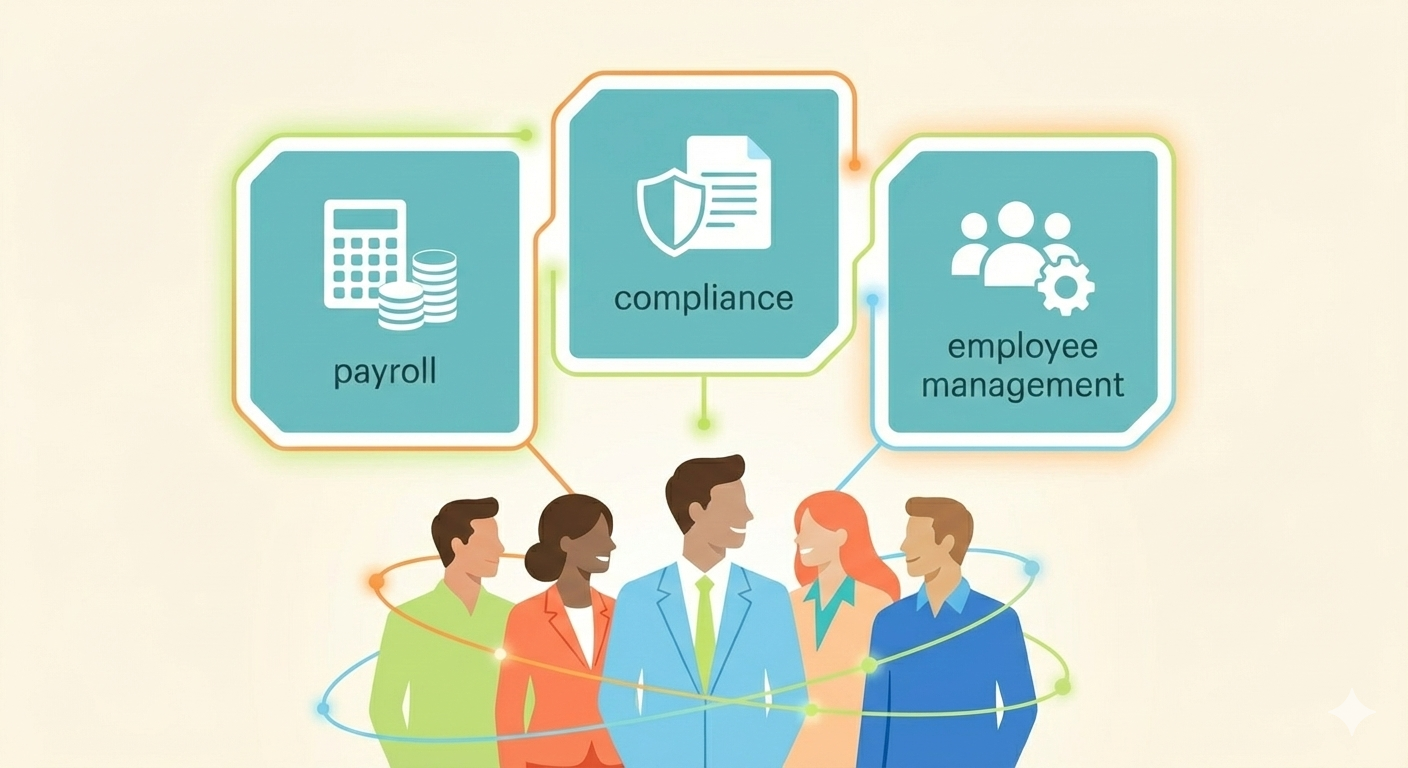
This shift toward Online HR Services is not driven by convenience alone; it reflects a broader change in how businesses view HR as a function that must be precise, scalable, and aligned with growth goals. By combining structured processes, expert oversight, and digital tools, this model enables companies to manage people, payroll, and compliance without unnecessary complexity.
Conclusion
Managing people operations requires more than good intentions; in reality, it demands consistency, accuracy, and compliance at every stage of growth. As organisations expand, relying solely on internal HR teams often creates stretched resources, operational gaps, and increasing pressure on leadership over time.
In this context, online HR services provide a practical alternative by bringing structure to people management, reliability to payroll, and discipline to compliance. With the right support model in place, companies actively build stronger HR foundations while also improving employee experience and staying focused on long-term business priorities rather than daily administration. At the same time, providers like HRTailor support this transition by delivering dedicated online HR assistance tailored to growing businesses, thereby helping them manage people operations with greater clarity, control, and confidence.
FAQs
They support core HR operations such as employee documentation, policy management, payroll coordination, compliance tracking, and day-to-day HR queries.
Online HR support follows structured processes and documented workflows, offering consistency and scalability without adding fixed headcount.
Yes. Employees get clear communication and prompt assistance through dedicated online HR support models like those offered by HRTailor.
Yes. This model is designed to adapt as headcount and HR complexity increase, making it suitable for long-term use.

About Abhijit Divekar
Managing Director & Founder at HRTailor
Abhijit Divekar is the Managing Director and Founder of HRTailor, India's first dedicated online HR manager service for startups and SMEs. Founded in 2019, HRTailor has grown to serve over 200 clients across India, offering end-to-end HR outsourcing starting from just INR 10,000 per month. Abhijit writes about entrepreneurship, scaling business operations, and the future of HR outsourcing in India.